


Pet parents are more invested in the health of their pets now than ever before. Learning how to take a dog's temperature and how to take a cat's temperature is clear evidence of this commitment. Veterinarians are delighted to see more pet parents actively engaging with the health of their pets, and most are more than happy to help them acquire this simple skill.
Learning how to take a dog or a cat's temperature is fairly easy to do. Let's look at the best way to take the temperature of your furry family members.
Why You Should Learn To Take Your Pet's Temperature

As in humans, dogs' and cats' body temperatures can tell us a lot about their overall health. While these species' temperatures are higher than ours (101.3 degrees Fahrenheit / 38.5 degrees Celsius), it's easy enough to tell what's too high or too low.
Fevers (above 102.5 degrees Fahrenheit / 39.2 degrees Celsius) can inform pet parents of issues like heat stroke, infections or systemic inflammatory diseases, as noted by the Merck Veterinary Manual.
Meanwhile, low temperatures (below 100 degrees Fahrenheit / 37.8 degrees Celsius) can tell us whether they've lost too much body heat. They may be hypothermic (as with exposure to the elements in winter) or possibly experiencing the effects of shock, low blood sugar, malnutrition or another severe system-wide disease.
Modest drops in temperature can even note when a mother is getting ready to give birth to her babies!
When To Take a Pet's Temperature
Whenever pets are lethargic, quieter than normal, or exhibit a change in appetite or other normal behaviors, temperature-taking can be helpful. This is especially true for cats, who are notorious for hiding most signs of illness. However, it's important to understand that plenty of illnesses can present without changes in body temperature. Thus, you should only take your pets temperature if you are planning to promptly contact a veterinarian and discuss your concerns about your pets health. Additionally, if you do not have experience taking your pet's temperature you should talk to a veterinarian before doing so. This is for the safety of both you and your pet.
Not only can a body temperature reading help you decide how soon to bring your pet to the vet (an elevated temperature should always prompt a call to your veterinarian), but an at-home reading gives the vet very useful information, too.
In fact, at-home temperature-taking is so beneficial that it has become a common teaching point for vets and their teams. If you are interested in learning this skill ask your vet about getting a tutorial as most are happy to teach you how to manage this safely at home.


Tasty Tips
How To Take a Dog's Temperature
The mechanics of how to take a dog's temperature are simple. Here are a few basics:
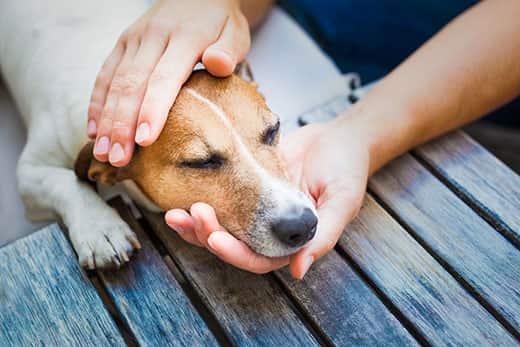
- Buy the right tool: A plastic, digital rectal thermometer (for humans) can be found at any pharmacy. Typically, for less than 10 dollars, there's no better healthcare investment. (Note: Most digital thermometers serve for either rectal or oral use. Ask your pharmacist if you're unsure.)
- Restrain properly: Most pet parents will find this to be a two-person job. One person can hold their pet's head and keep their body still while the other holds their tail up to facilitate rectal insertion of the thermometer. For dogs who avoid the procedure by sitting down, a third person (to keep the patient in a standing position) may be necessary. Treats and toys are generally helpful as distractors. If your pet becomes distressed or you do not feel you can restrain them safely, it is better to wait on having their temperature taken until they are being evaluated by your vet. Although this information is helpful, it should not be acquired at the risk of compromising the health and well-being of both you and your pet.
- Take their temperature: After applying a bit of petroleum jelly to the business end of the thermometer (a pea-sized amount), insert it into the rectum (an inch is far enough). Then, wait for the beep (or for the digital readout to stabilize) and you're done!
Looking to learn how to take a cat's temperature? The mechanics are just as easy. The only hard part is getting your kitty to behave. Because cats are generally smaller and often resist restraint, cat caretakers may need to try a variety of inducements or restraint techniques. This is where it becomes ideal to have your vet's team demonstrate the best methods for your individual cat.
Things to Keep in Mind When Taking Your Pet's Temperature
When learning how to take a dog's temperature, or a cat's, having the right equipment is essential. For example, glass thermometers can break and expose your pet to mercury and glass, and some older thermometers can take quite a long time to get to temperature.
It's also critical that pet parents take their pet's body temperature from the rectum. Although vets yearn for a less invasive way to take their patients' temperatures, non-rectal methods can be more difficult to interpret.
When learning how to take a cat's temperature, restraining your cat may take some time and patience. Watching online videos on properly restraining your cat can be helpful in these cases, but having your veterinarian show you how to do this for your specific cat remains your best course of action.
It's also important to note that some pets' body temperatures are naturally higher or lower than the majority. Moreover, exercise and excitement can raise a temperature and lengthy inactivity or geriatric age can lower it. Again, anytime you elect to take your pets temperature it should be done with the intention of promptly contacting a veterinarian to discuss your concerns. Finally, it bears repeating that not all pets can be trained to accept this procedure. If the stress it causes is significant or your safety is at risk, at-home temperature-taking should be reconsidered.

Related products
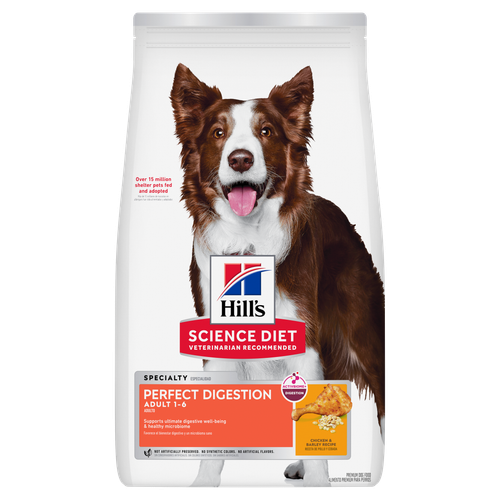
Adult Perfect Digestion Chicken & Barley Recipe Dog Food
Science Diet's breakthrough nutrition supports ultimate digestive well-being & healthy microbiome
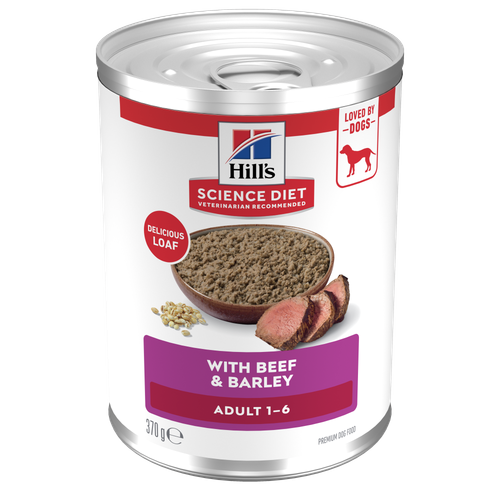
Adult with Beef & Barley Dog Food
Beef & Barley recipe with precisely balanced nutrition to keep Adult dogs active and healthy

Perfect Digestion Adult Wet Dog Food
Hill's Science Diet Perfect Weight Adult dog food with Chicken & Vegetables is specially formulated for healthy weight maintenance and weight support in adult dogs.

Adult Perfect Weight Chicken Recipe Cat Food
Over 70% of cats lost weight within 10 weeks when fed this nutrition (USA Study)
Related articles

Antioxidants: Fueling your pet's fight against free radicals
Learn more about free radicals and how antioxidants help provide some protection against free radicals and how Hills pet foods makes a difference.

Managing Pet Separation Anxiety When Returning to Work & School
When it's time to return to school or work full-time, learn helpful tips to avoid pet separation anxiety & help your dog or cat feel safe when you're gone.

Dogs & Cat Toothpaste, Toothbrushes & Brushing Tips
Learn what to look for in dog & cat toothpaste, including ingredients to avoid, as well as how to choose the right toothbrush and tips for brushing.

Creating a Pet Preparedness Plan for Emergencies
Not feeling well enough to care for your furry friend? Creating a pet preparedness plan ensures that your pet gets the care, attention and love they need.
Put your pet on a diet without them knowing
Our low calorie formula helps you control your pet's weight. It's packed with high-quality protein for building lean muscles, and made with purposeful ingredients for a flavorful, nutritious meal. Clinically proven antioxidants, Vitamin C+E, help promote a healthy immune system.
Put your pet on a diet without them knowing
Our low calorie formula helps you control your pet's weight. It's packed with high-quality protein for building lean muscles, and made with purposeful ingredients for a flavorful, nutritious meal. Clinically proven antioxidants, Vitamin C+E, help promote a healthy immune system.