


If you've seen those eager puppy-dog eyes staring at you while you chop vegetables for salad, you might be curious if it is okay to give your dog some cucumber. If you're wondering whether it's safe to feed them some, keep reading to learn all about dogs and cucumbers, as well as the cucumber's close cousin: the zucchini.
Can My Dog Eat Cucumbers?
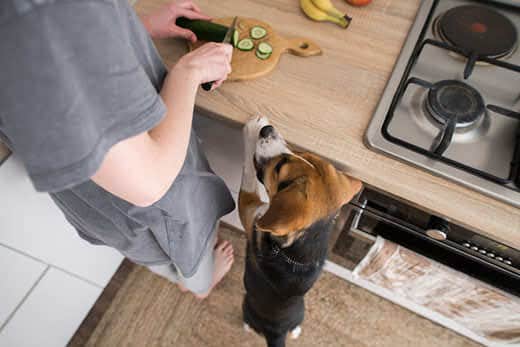 Cucumbers can be a safe and nutritious snack for dogs. Rich in fibre and antioxidants, cucumbers are a source of Vitamins C and K as well as minerals and electrolytes, like magnesium and potassium. Low in fat and sodium, half a cup of cucumber slices only contains about eight calories, says the Bow Wow Meow Insurance, making them an excellent treat for dogs that need to watch their weight. As members of the gourd family, cucumbers are made up of 96 percent water, and many dogs find cucumbers to be a refreshing summertime treat.
Still, with anything outside of your dog's normal dog food, treats, including cucumbers, should never make up more than ten percent of their daily calories. And, while they might not be rich in calories, you want to ensure that your dog is getting the right balance of nutrients. Even for foods with the helpful vitamins and minerals, if they are causing an improper balance in your dog's daily nutrient intake, your dog might not be benefiting.
While cucumbers are nutritious and non-toxic to dogs, they're not completely without risk. Feeding your pup too much cucumber at once can upset their gastrointestinal tract and cause stomach trouble. Choking is also a possibility, especially if your dog is a fast eater who tends to inhale their food. It's never a good idea to give your pooch a whole cucumber. Instead, cut it into small bite-sized pieces before giving it to your dog. But, before ever giving anything to your dog, cucumber or not, be sure to check with your veterinarian to make sure they don't have any concerns feeding them to your dog.
Can My Dog Eat Zucchini?
As the close cousin to the cucumber, zucchini can be just as safe, nutritious and is one of the healthiest vegetables for dogs. In addition to the same calorie content and nutrients found in cucumber, zucchini is also a source of Vitamins A and B6. It's richer in minerals than cucumber, but on the other hand, zucchini is slightly less rich in fiber and contains about one gram of sugar per cup.
Zucchini carries the same minimal risks of gastrointestinal upset and choking as cucumber, so it should be handled in the same way when feeding it to your dog. However, zucchini carries one additional risk that's more serious. Dogs Naturally Magazine cautions against feeding dogs bitter-tasting zucchini. This is a sign of cucurbitacins, also known as "bitter principles," getting into the fruit. Normally, cucurbitacins are limited to the stems and leaves of the plant, but on rare occasions, they seep into the fruit. Because of potential toxicity, it's best to taste test zucchini before serving it to your dog. Although it is even less common to for cucurbitacins to seep into cucumbers, it's still possible with this popular veggie as well. Avoid giving it to them if you detect any bitterness. And, as with cucumbers, be sure to talk to your veterinarian before feeding zucchini to your dog.


Tasty Tips
Which is Best for My Dog?
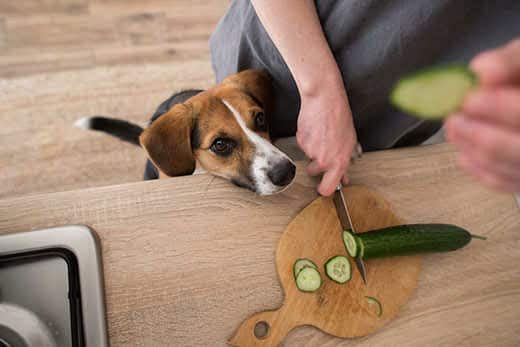
Cucumbers and zucchini are very similar in caloric content and nutritional value, although zucchini contains a few more vitamins and minerals than cucumbers. But, if you're feeding your dog high-quality dog food each day, their nutritional needs should be well taken care of, and they don't really need any additional fruits or vegetables added to their diet for the sake of nutrients. As for which of these members of the gourd family are best for your dog, it might just come down to which one your pooch likes best.
How to Safely Feed Cucumbers and Zucchini to Your Dog
While dogs and cucumbers can be a winning combination, the same can't be said for pickles, which often contain garlic and onions, both of which are toxic foods for dogs. T The same can be said for zucchini that's been prepared for human consumption, which includes zucchini bread and sugar-free zucchini bread - it can contain artificial sweeteners, like xylitol, that are can be highly toxic to dogs.
It's fine to feed zucchini or cucumbers to your pooch, either raw or cooked, but keep them unseasoned. If feeding either of them to your dog for the first time, start with only a small bite or two, then watch to see how well your pup tolerates it. If they show signs of stomach upset, don't give them anymore. And, as with any treat, make sure to watch their calorie intake.

Related products

Adult 6+ Large Breed Chicken Meal, Barley & Rice Recipe Dog Food
Supports energy level, joint health, and beautiful coat in large breed mature dogs

Adult Perfect Weight & Joint Support Chicken & Brown Rice Recipe Dog Food
This weight management and mobility support dog food was created with Hill’s unique understanding of the biology of overweight dogs.
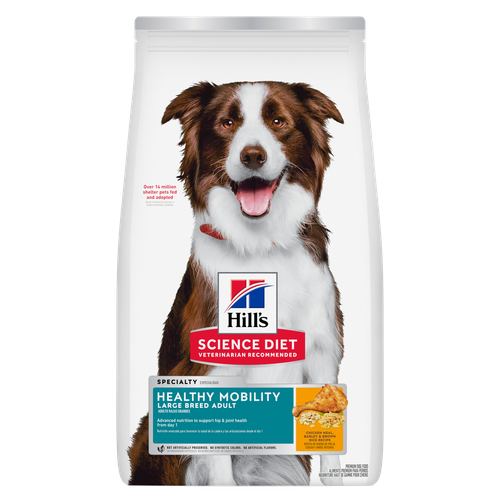
Healthy Mobility Large Breed Chicken Meal, Barley & Brown Rice Recipe Dog Food
Advanced nutrition shown to support joint health and improve mobility
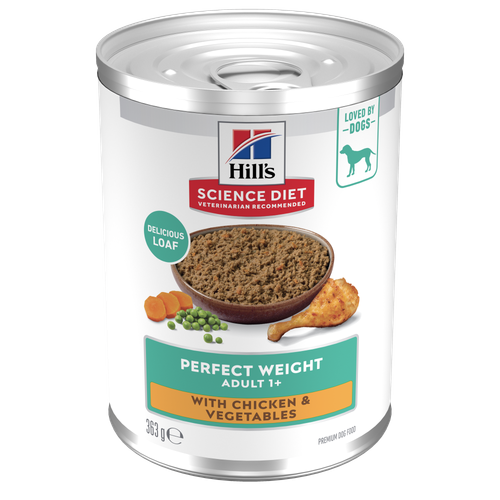
Perfect Weight Adult Wet Dog Food
Over 70% of dogs lost weight within 10 weeks when fed this nutrition
Related articles

What to Feed Your Pregnant or Nursing Dog
Learn what you can feed your pregnant or nursing dog to keep her and her new pups healthy.

Hill's Puppy Food: Quality Ingredients for Health & Nutrition
Selecting the right food for your puppy is a key to quality nutrition and a long, healthy life., Learn more about how to select the right puppy food.

Things You Can Do to Help Your Dog's Sensitive Stomach
A dog with a sensitive stomach has special needs. Learn more about sensitive stomach symptoms in your dog, what you can do to help sooth your pet’s insides and get recommendations on sensitive stomach dog food.

Helpful Tips for Exercising with Your Dog
Though it may seem like your four-legged friend loves nothing more than to nap on the couch, dogs need regular exercise to stay healthy just like people do.

Put your dog on a diet without them knowing
Our low calorie formula helps you control your dog's weight. It's packed with high-quality protein for building lean muscles, and made with purposeful ingredients for a flavorful, nutritious meal. Clinically proven antioxidants, Vitamin C+E, help promote a healthy immune system.
Put your dog on a diet without them knowing
Our low calorie formula helps you control your dog's weight. It's packed with high-quality protein for building lean muscles, and made with purposeful ingredients for a flavorful, nutritious meal. Clinically proven antioxidants, Vitamin C+E, help promote a healthy immune system.